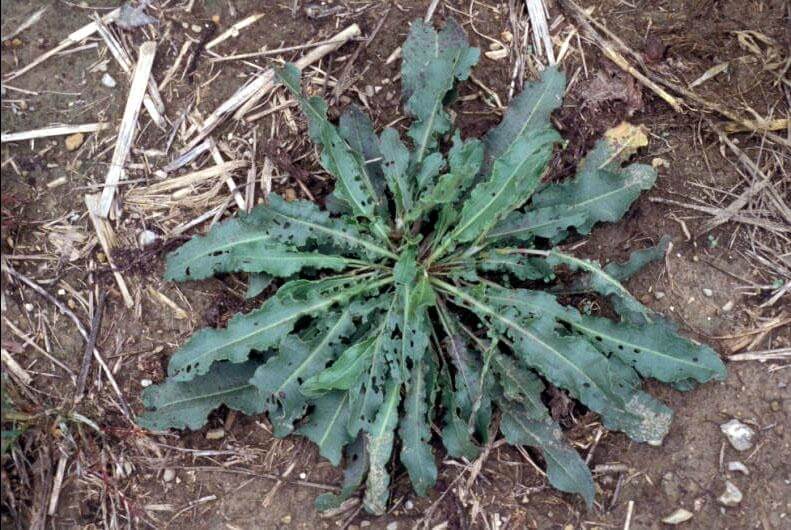
Often dismissed as a stubborn weed, the common dock leaf (genus Rumex) holds a surprisingly crucial, unsung role, particularly within the realm of sustainable agriculture. Far from being a mere nuisance, this resilient plant offers a fascinating glimpse into nature's intricate balance, providing indispensable support for organic farms committed to ecological harmony. In an era where environmentally friendly practices are paramount, understanding the dock leaf’s true value transcends its humble appearance, revealing its pivotal contributions to pest control and overall farm biodiversity.
The Unsung Hero of Organic Pest Control: Dock Beetles
For organic farmers, managing pests and unwanted plant growth without resorting to synthetic chemicals is a constant challenge. This is where the dock leaf steps into the spotlight, not just as a plant, but as a vital host. It provides a unique "kindergarten," as one observer aptly put it, for the larvae of the emerald green dock beetle (Gastrophysa viridula). These vibrant insects, along with their developing young, have a voracious appetite specifically for dock leaves.
The life cycle of the dock beetle is a marvel of natural pest management. Adult beetles lay their tiny, orange eggs on the underside of dock leaves. Upon hatching, the larvae immediately begin to feast, meticulously munching their way through the leaf tissue. This focused feeding by both larvae and adult beetles acts as a potent, organic form of biological control. Instead of needing chemical herbicides to suppress dock populations, organic farmers can strategically allow docks to grow in certain areas, knowing they are cultivating a thriving habitat for these beneficial insects.
This symbiotic relationship epitomizes the principles of Integrated Pest Management (IPM), a holistic approach that prioritizes ecological understanding over chemical intervention. By fostering natural predator-prey dynamics, organic farms reduce their environmental footprint, protect pollinators and other beneficial insects, and ensure the long-term health of their soil and ecosystems. The presence of a "lacy dock leaf," perforated by the diligent work of dock beetle larvae, is not a sign of neglect, but rather a testament to a healthy, balanced, and truly kind approach to farming.
Beyond Pest Control: The Dock Leaf's Broader Ecological Role
While its role in housing dock beetles for pest control is significant, the dock leaf's contributions to a healthy ecosystem extend further. Dock plants are known for their deep taproots, which can help break up compacted soil, improve aeration, and bring nutrients from deeper soil layers closer to the surface. This can benefit surrounding plants and contribute to better soil structure over time, a fundamental aspect of regenerative agriculture.
Furthermore, allowing a diverse range of plant life, including so-called "weeds" like docks, on an organic farm enhances overall biodiversity. This diversity creates more complex food webs and habitats, supporting a wider array of insects, microorganisms, and even small wildlife. A biodiverse farm is often more resilient to disease and extreme weather, as it doesn't rely on monocultures that can be vulnerable to specific threats. The hardy nature of the dock plant, with its ability to produce many seeds and spring up in various conditions, makes it a reliable component of this ecological tapestry, providing consistent food and shelter for its beetle companions year after year. It’s a powerful example of how what we perceive as a challenge can, with a shift in perspective, reveal itself to be an inherent solution or a vital part of a larger, interconnected system.
Nature's First Aid Kit: The Traditional Power of the Dock Leaf
Stepping away from the fields and into the wild, the dock leaf is perhaps most famously known for its traditional role as an immediate natural remedy. Ask anyone who's spent time rambling through British fields, and they'll likely confirm the age-old wisdom: if you get stung by a nettle, look for a dock leaf nearby. Rubbing a freshly crushed dock leaf onto the stinging area is widely believed to soothe the pain and irritation almost instantly.
This common knowledge, passed down through generations, highlights the dock leaf's practical value beyond its agricultural significance. While the exact scientific mechanism is still debated, many attribute its soothing properties to sap containing compounds like oxalic acid, which may help neutralize the formic acid in nettle stings, or simply a cooling, astringent effect. Regardless of the precise science, the experience of finding quick relief from a common outdoor discomfort solidifies the dock leaf’s reputation as a readily available, natural balm. This makes it an invaluable companion for hikers, gardeners, and children exploring the outdoors. For a deeper dive into this natural remedy, you might find our article Dock Leaf for Nettle Stings: Your Natural Outdoor Remedy particularly enlightening.
Finding Your "Dock Leaf": A Metaphor for Resilience and Solutions
The concept of the dock leaf as a source of relief or a solution extends beyond its literal applications in farming or first aid. In challenging times, whether personal or global, people often search for their "dock leaf"—that unexpected source of comfort, strength, or clarity amidst turmoil. Just as an organic farmer identifies a perceived problem (docks) and discovers a natural, sustainable solution (dock beetles), we too can learn to identify our challenges and look for the inherent solutions often closer than we think.
This metaphor encourages a mindset of resilience and resourcefulness. It prompts us to re-evaluate what we might initially dismiss as a "weed" or a "sting" in our lives and consider what unexpected benefits or pathways to healing might lie within it or nearby. During periods of stress or uncertainty, recognizing and leveraging our personal "dock leaves"—be it a supportive relationship, a creative outlet, a moment of quiet reflection, or the simple act of sharing our stories—can provide immense comfort and help us navigate complexity. It’s a powerful reminder that even amidst chaos, nature, and indeed life itself, often provides the very tools we need to find our way. To explore this profound idea further, consider reading Your Personal Dock Leaf: Finding Relief Amidst Life's Stings.
In conclusion, the common dock leaf is far more than just a ubiquitous plant to be eradicated. From its critical role in supporting organic farming through biological pest control via the emerald green dock beetle, to its traditional use as a natural remedy for nettle stings, and even as a powerful metaphor for finding solutions and resilience in life, the dock leaf offers remarkable and often overlooked value. By understanding and appreciating these multifaceted contributions, we gain a deeper respect for the intricate web of nature and learn that sometimes, the most profound answers are found in the most unassuming places, waiting to be discovered and celebrated.